
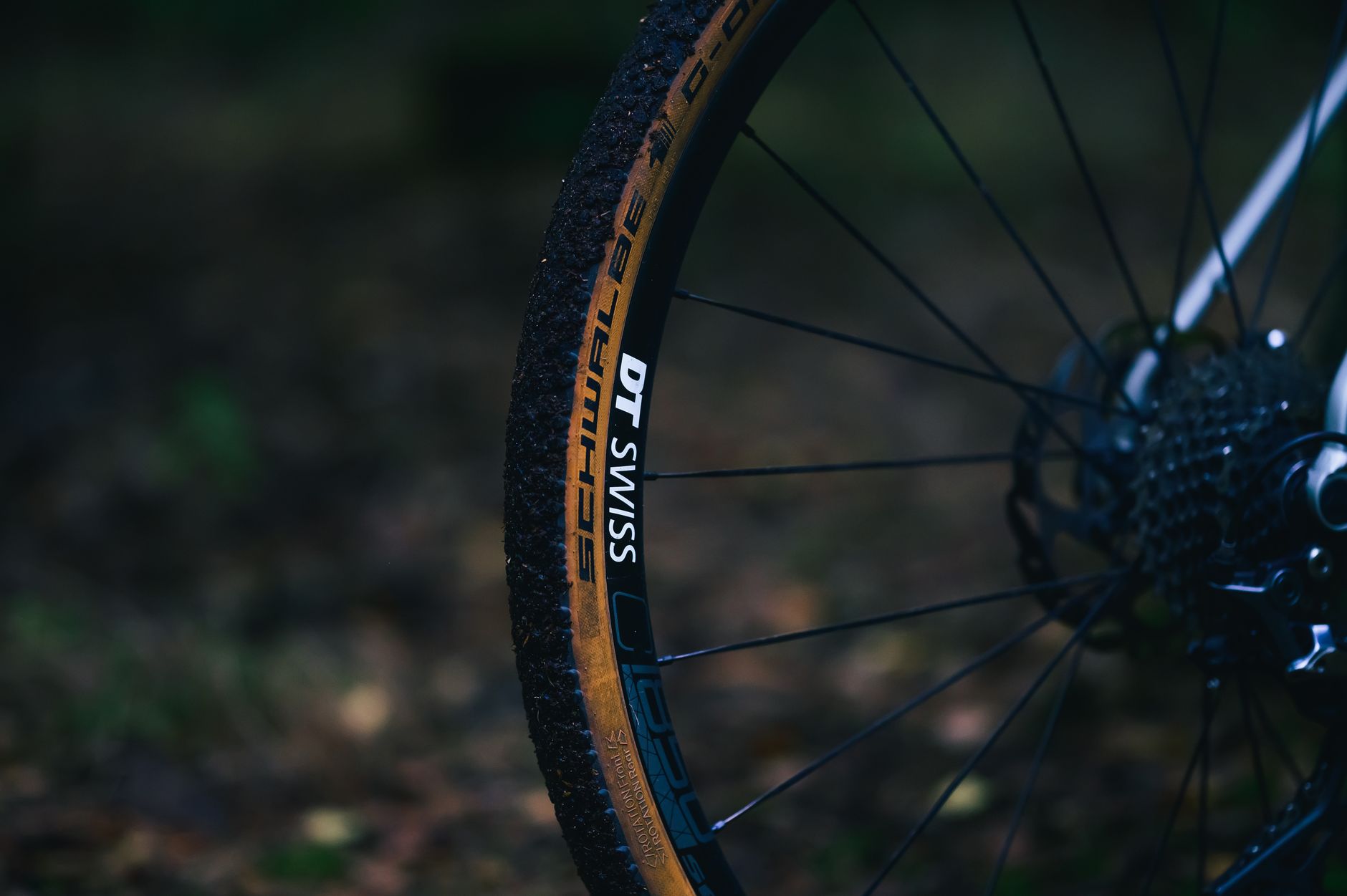
Key Takeaway: Match your gravel tire to your terrain — file-tread or slick centers for fast hardpack, blocky and well-spaced knobs for loose rock, the most aggressive shedding tread you can fit for mud, and a moderate 38–42 mm dual-purpose tread for mixed routes. No other gravel upgrade changes ride feel, grip, and flat resistance more than picking the right tire for the surfaces you actually ride.
At-a-Glance: Best Gravel Tire by Terrain
- Hardpack and fast roads: WTB Byway 700x40, Panaracer GravelKing SS 700x28, Vittoria Terreno Dry 700x33.
- Loose rock and technical terrain: Schwalbe G-One Ultrabite 700x40, Teravail Cannonball 700x38, Challenge Gravel Grinder 700x35.
- Mud and wet conditions: Schwalbe G-One Ultrabite and Teravail Cannonball — the most aggressively spaced knobs in the test.
- Mixed routes: Panaracer GravelKing SK 700x40, Maxxis Rambler 700x40, Compass Barlow Pass 700x38.
- Best one-tire quiver: Panaracer GravelKing SK 40 mm — the closest thing to a do-everything gravel tire.
How These Gravel Tires Were Tested
Ride-first, spec-second. Each tire was mounted tubeless where possible with a consistent sealant load and run at terrain-appropriate pressures: 28–35 psi on 40 mm casings for rough roads, 40–60 psi on 33 mm hardpack setups. Scoring focused on rolling speed, mid-corner grip, braking traction, puncture resistance, and how predictably each tire handled pavement-to-dirt transitions — plus how easy each was to seat and seal on common rim widths.
Best Gravel Tires for Hardpack and Fast Rides
On hardpack, low rolling resistance and a slick or minimally knobbed center tread rule. For fast gravel, broken pavement, and dry fire roads, look for a tight central tread, confident shoulders for cornering, and a casing that balances suppleness with cut resistance.
WTB Byway TCS 700x40 — Best overall hardpack tire. Smooth center for long miles on hardpack and pavement, subtle micro-knobs for unpaved corners, and a tubeless-ready casing that runs fast without feeling harsh. Nimble at 40–50 psi and only loses out to true slicks on pure pavement sprints. Best for: riders who mix hardpack with road miles.
Panaracer GravelKing SS 700x28 — Fastest on pavement. The closest thing to a road tire with gravel confidence: super-slick center, very low rolling resistance, ideal for commuting and fast mixed-surface rides. Less forgiving over sharp rocks than thicker casings — pick it if your routes stay mostly clean. Best for: fast commuters and riders who want one tire for road and groomed gravel.
Vittoria Terreno Dry 700x33 — Best for dry packed dirt. Designed explicitly for dry, packed dirt and fast gravel; a long-time favorite for racers and fast commuters. A slick center with textured shoulders keeps it planted through sweeping high-speed corners while returning excellent mileage. Best for: racers and dry-region gravel riders.
Best Gravel Tires for Loose Rock and Technical Terrain
Loose rock demands durable casings and chunky, well-spaced knobs that dig in and shed grit. You want tires that stay composed when the surface disintegrates underneath you and keep flats from sharp stones to a minimum.
Schwalbe G-One Ultrabite 700x40 — Best bite for steep, loose terrain. Delivered the chewiest bite of the group on steep, loose descents. The blocky, aggressive tread grabs edges and holds through transitions. Not the fastest on pavement, but when the trail crumbles under speed this is the tire you want. Tubeless setup is straightforward and the bead seals reliably. Best for: chunky, technical gravel and mountain-adjacent routes.
Teravail Cannonball 700x38 — Best for rocky canyon rides. Built like a little tank: burly casing, rounded shoulder knobs for predictable cornering, and tread spacing designed to clear grit. At 32–36 psi on a rocky canyon route it confidently held its line without excessive bounce. Best for: riders prioritizing puncture resistance on jagged terrain.
Challenge Gravel Grinder 700x35 — Best loose-surface all-rounder. A classic center ridge with aggressive shoulders makes this a versatile loose-surface choice. It maintains traction on steep climbs while delivering above-average cornering confidence — a smart middle ground if you need bite but still want reasonable rolling speed. Best for: mixed loose-and-fast routes.
Best Gravel Tires for Mud and Wet Conditions
If you ride spring melt or trails that turn to soup after a single rain, look for widely spaced knobs, a strong casing, and generous tread depth. True mud-specific gravel tires are rare — most gravel-focused options trade mud-shedding for speed — but a handful of aggressive treads shed dramatically better than others.
The clear performers in muddy conditions were the more aggressively knobbed options: the Schwalbe G-One Ultrabite and Teravail Cannonball. They are not cyclocross mud specialists, but they handled sticky climbs and deep ruts better than any low-profile option in the test.
Practical mud tip: Run slightly higher pressures to avoid pinch flats in deep ruts, and keep your drivetrain clean — mud picks up grit and wears a chain faster than anything else on the bike.
Best Gravel Tires for Mixed Routes
Mixed routes demand compromise: efficient rolling on gravel, enough side knobs for dirt and rocks, and a supple casing that smooths vibration without sacrificing puncture resistance.
Panaracer GravelKing SK 700x33 and 700x40 — The go-to mixed-route tire. The 33 mm version is quick and confident on hardpack; the 40 mm brings comfort and puncture resistance for longer, rougher days. On a mixed-route century the 40 mm SK soaks up chatter, corners predictably, and stays fast on long paved spins between dirt sections. Best for: riders who want one tire for everything.
Maxxis Rambler 700x40 — Best pavement-to-gravel split. A low-profile, fast tire that still offers enough shoulder traction for veering off-road. Tubeless-ready, with a casing that balances speed and durability — a good fit for riders who split time evenly across pavement and gravel. Best for: 50/50 road-and-dirt riders.
Compass Barlow Pass 700x38 — Best ride feel. For riders who value a supple ride and fine-tuned handling. The handmade casing, fast-rolling tread, and excellent compliance make it a joy on long, varied rides. Pricier, but it pays back in comfort and predictability over hard days. Best for: long-distance gravel and audax riders.
Real-World Ride Test Notes
Hardpack test (50 km fast loop): WTB Byway and Vittoria Terreno Dry stood out for speed and cornering efficiency. Panaracer GravelKing SS was fastest on pavement transitions but felt thin over jagged rocks.
Loose rock canyon test (30 km technical): Schwalbe Ultrabite and Teravail Cannonball dominated. They allowed more aggressive lines with less fear of slippage. Maxxis Rambler did well but needed extra attention on steep, loose climbs.
Mud test (singletrack after heavy rain): No gravel tire became a pure cyclocross mud tire, but the Schwalbe and Teravail shed mud best and held bite. Panaracer GravelKing SK packed mud and required more care at low speeds.
Mixed-century test (120 km of pavement, hardpack, and singletrack): Compass Barlow Pass and Panaracer GravelKing SK 40 shone — comfortable, resilient, and predictable handling throughout the day.
Gravel Tire Setup Tips That Actually Matter
Go tubeless if you can. Beyond puncture protection, tubeless lets you run lower pressures for traction without increasing pinch-flat risk. Run 32–36 psi on 38–40 mm mixed tires for comfort and grip; 40–55 psi on 30–34 mm fast setups.
Sealant volume: 40–60 ml per tire for 33–40 mm widths. Add a bit more if you ride thorny regions or technical rock gardens. Refresh sealant every 2–4 months; latex dries out faster in hot, dry climates.
Rim width matters. Wider internal rim widths (21–25 mm) let you run lower pressures with better sidewall support. Check tire manufacturer recommendations before pushing pressure and load.
Mind your clearance. Aggressive tread and mud demand space. If your frame or fork has limited clearance, choose narrower, faster tires instead of packing on luggy rubber that will clog with debris.
Rotate to extend wear. If you run a front-specific tire for cornering bite and a fast rear for rolling efficiency, rotate every 3,000–5,000 miles to even out wear.
The Bottom Line
No single gravel tire rules every condition — the right choice depends on your local surfaces and how you ride them. For speed on hardpack, aim for slick centers and fast casings (WTB Byway, GravelKing SS). For loose rock, choose blocky, spaced knobs and burly casings (Schwalbe Ultrabite, Teravail Cannonball). For everyday mixed riding, a 38–40 mm GravelKing SK or Compass Barlow Pass delivers the most adaptable performance. Treat the tire as the single most important contact point on the bike, and the rest of your gravel kit gets easier to dial in.
Frequently Asked Questions
What is the best all-around gravel tire for mixed conditions?
A moderate-tread 40–42 mm tire with decent shoulder knobs covers about 80% of gravel riding well. Tires in this category roll efficiently on hardpack, grip adequately in loose terrain, and handle occasional mud without sacrificing too much speed. The Panaracer GravelKing SK 40 is the benchmark for this category and the most-recommended one-tire-quiver pick across our test.
What pressure should I run for gravel tires?
Tubeless: 25–35 psi for 40–42 mm tires on most gravel — adjust upward for heavier riders. With tubes, add 5–10 psi to prevent pinch flats. Lower pressure improves grip and comfort; higher pressure is faster on hardpack. Never exceed the maximum pressure printed on the sidewall.
Do I need tubeless for gravel riding?
Not required, but genuinely useful. Tubeless lets you run lower pressures without pinch-flat risk, and sealant handles the small punctures that would cause slow leaks with tubes. For regular gravel riding the setup effort pays off quickly. For occasional rides or budget builds, tubes still work fine — just carry a spare and a hand pump.
How long do gravel tires last?
Most quality gravel tires last 2,500–4,000 miles depending on terrain mix and pressure. Pavement-heavy use wears the center tread faster; loose rock chews up shoulder knobs. Front tires typically last roughly twice as long as rears because the rear carries more weight and drives the bike forward.
What tire width is best for gravel?
For most gravel riders, 38–42 mm is the sweet spot — wide enough to absorb chatter and run low pressures, narrow enough to stay fast on pavement transitions. Race-focused riders on smooth gravel can drop to 33–35 mm. Bikepackers and rough-route riders often run 45–50 mm if the frame allows.